
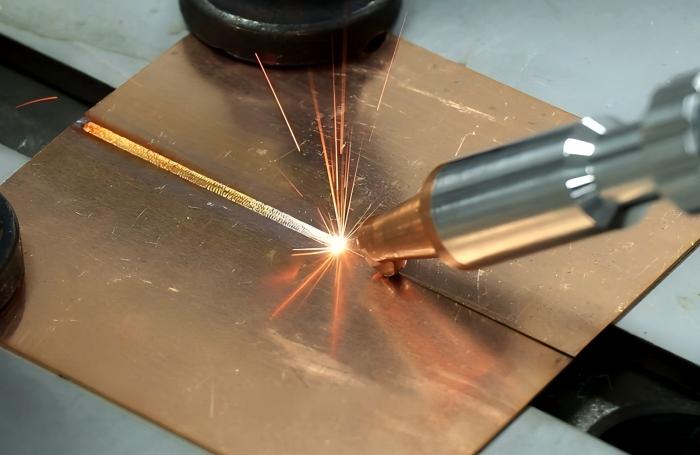
Introduction
In modern industrial metal manufacturing, processing precision, production efficiency, and product consistency directly determine the competitiveness of global processing enterprises.
Traditional welding methods, such as arc welding, spot welding and gas welding, often lead to excessive thermal deformation, rough weld seams, slow processing speed, heavy slag splashing, and high dependence on skilled welders. These problems can increase rework, reduce product quality, and delay order delivery.
As an advanced high-precision metal joining solution, the laser welding machine has gradually replaced conventional welding equipment. It has become the mainstream choice for high-end manufacturing factories worldwide. Modern fiber laser welding machines for metal use concentrated laser energy, minimal heat-affected zones, and flexible automated operation to solve many technical and efficiency bottlenecks of traditional welding processes.
This article explains the working principle, types, advantages, applicable materials, and industrial applications of industrial laser welding equipment. It aims to help global wholesalers, factory purchasers, and engineering technicians select the most suitable precision laser welding equipment for their production lines.
1. What Is a Laser Welding Machine?
A laser welding machine is a high-efficiency, high-precision industrial welding device that uses a high-density fiber laser beam as the core heat source for metal joining.
This industrial laser welding equipment accurately focuses laser energy on a tiny welding area. It instantly melts and fuses carbon steel, stainless steel, aluminum, and alloy materials to form solid, tight, and durable weld joints with excellent structural stability and tensile strength.
Unlike traditional welding with scattered heat sources, professional laser welding offers ultra-high energy density. It supports two core welding modes:
- Micro precision welding for ultra-thin sheets
- Deep penetration welding for thick metal plates
This process does not cause large-area heat diffusion or secondary damage to workpieces. With non-contact processing characteristics, a laser welding machine can achieve flawless seamless welding for precision tiny parts and irregular special-shaped workpieces that are difficult to process with traditional welding techniques.
2. How Does a Laser Welding Machine Work?
The working process of a laser welding machine is stable and efficient. It can be divided into three core steps.
First, the laser generator outputs a high-purity laser beam. The optical system then focuses the beam into a tiny light spot.
Second, the high-temperature laser spot instantly melts or even partially vaporizes the surface of the metal workpiece, forming a molten pool.
Third, as the laser beam or workpiece moves, the molten metal flows and solidifies rapidly. This process forms a continuous, flat, and high-strength weld seam.
Commercial laser welding is generally divided into two categories:
2.1 Heat Conduction Welding
Heat conduction welding is ideal for 0.1mm to 3mm thin metal sheets, electronic precision parts, and decorative hardware with strict surface requirements. It is widely used in precision laser welding scenarios.
2.2 Deep Penetration Welding
Deep penetration welding is designed for 3mm+ thick metal plates, structural parts, and heavy industrial components.
This dual-mode design enables industrial laser welding machines to cover both micro precision processing and heavy-duty thick plate welding scenarios.
3. Main Types of Laser Welding Machines
Based on operation mode, automation level, and application scenarios, mainstream industrial laser welding machines can be divided into three categories. They cover small-batch processing, mass automated production, and multi-scene flexible operation.
3.1 Handheld Laser Welding Machine
As one of the most cost-effective flexible welding solutions for small and medium factories, the handheld laser welder replaces the fixed bench structure of traditional welding equipment. It uses an ergonomic portable welding gun.
This portable laser welding machine is lightweight, easy to carry, and simple to operate. It does not require professional welding skills. Ordinary workers can master standard operation after short-term training.
It performs especially well in laser welding machine for stainless steel and daily hardware processing. It is suitable for:
- Stainless steel products
- Hardware furniture
- Sheet metal processing
- On-site engineering repair
- Small-batch customized production
3.2 Automatic Laser Welding Machine
The automatic laser welding machine is equipped with high-precision fixed workbenches, servo motion systems, and intelligent programmable controllers. It realizes fully positioned, repeatable, and stable batch cyclic welding.
This automated laser welding equipment reduces human error and defective rates. As a core model in the high precision laser welder series, it has become essential for standardized, large-scale industrial production lines.
It is suitable for:
- 3C electronic parts
- Precision hardware
- Auto parts
- Battery components
- Standardized batch production lines
3.3 Robot Laser Welding Machine
The robot laser welding machine integrates multi-axis intelligent robotic arms and laser welding systems. It achieves fully unmanned intelligent welding operations.
It supports arbitrary-angle and three-dimensional space welding. It also offers strong compatibility for complex curved surfaces, oversized workpieces, and high-precision structural components.
This type of laser welding machine can be seamlessly integrated into smart factory unmanned production lines. It enables 24-hour continuous stable operation and greatly improves production automation.
It is widely used in:
- Automobile body manufacturing
- Aerospace parts
- Large mechanical equipment
- New energy industry large-scale production
4. Core Advantages of Laser Welding Machine Over Traditional Welding
Laser welding equipment offers comprehensive advantages in precision, efficiency, cost, and yield. It solves many industry pain points of traditional welding.
4.1 Ultra-High Welding Precision, Minimal Workpiece Deformation
A standard industrial laser welding machine can focus the laser beam into an ultra-tiny light spot. Its heat-affected zone can be as small as 0.1mm to 0.5mm.
This localized rapid heating and cooling method avoids overall thermal deformation, warping, and cracking. The weld seam is flat, smooth, uniform, and free of pores, slag inclusions, and cracks.
For thin sheet and precision metal products, high precision laser welding greatly reduces subsequent polishing, grinding, and correction procedures. It significantly improves finished product yield and surface quality.
4.2 Fast Welding Speed, Greatly Improved Production Capacity
The processing efficiency of a standard laser welding machine is 2 to 5 times higher than traditional arc welding and spot welding.
High-power industrial fiber laser welding machines for metal can even reach 5 to 10 times the working speed of conventional welding equipment.
They support long-term continuous processing and fast seam forming. As a result, the laser welding machine shortens production cycles, accelerates order delivery, and helps manufacturing enterprises expand production capacity while maintaining stable quality.
4.3 Wide Material Compatibility, Supporting Dissimilar Metal Welding
Industrial laser welding equipment supports almost all common industrial metal materials, including:
- Stainless steel
- Carbon steel
- Aluminum alloy
- Pure copper
- Titanium alloy
- Galvanized sheet
- Alloy steel
Specifically, the dedicated laser welding machine for stainless steel delivers flawless welding results with low discoloration and high seam firmness.
Most importantly, professional laser welding machines can achieve stable, firm, and high-quality welding of dissimilar metals. This advantage makes them suitable for applications that traditional welding processes find difficult to handle.
4.4 Low Subsequent Cost and High Cost Performance
Traditional welding often requires a large number of consumables, such as welding rods and welding wires. Laser welding machines, however, achieve low-splash and low-consumption processing with almost no auxiliary materials.
The weld seam is well-formed in one step. This eliminates the need for secondary polishing, grinding, and repair processes.
Therefore, a laser welding machine can save raw material costs and labor costs. It also reduces long-term equipment operation and maintenance expenses, delivering strong overall cost performance for industrial production.
4.5 Simple Operation and Strong Adaptability
Modern intelligent laser welding machines use pre-programmed parameter settings. They reduce dependence on senior welder skills.
New employees can master standard operation within 1 to 3 days of simple training. This solves the industry pain point of difficult recruitment and high labor costs for professional welding technicians.
In addition, the equipment supports customized fixtures and intelligent automatic programming. It can flexibly adapt to diversified workpiece specifications and personalized production needs.
5. Industrial Applications of Laser Welding Machines
With its strong comprehensive performance, the laser welding machine has become standard supporting equipment in many high-precision manufacturing fields.
5.1 Automotive and New Energy Industry
In the automotive and new energy industry, high-precision laser welding machines are widely used for:
- Automobile body aluminum alloy structural parts
- Engine precision components
- New energy battery module shells
- Copper-aluminum bus bars
- Vehicle chassis parts
The stable and high-strength welding joints ensure excellent air tightness, pressure resistance, and structural stability. They fully comply with strict international automobile manufacturing safety standards.
5.2 Precision Electronics and Hardware Industry
The precision laser welding function of industrial laser welding machines is suitable for micro-welding of:
- 3C electronic parts
- Mobile phone structural components
- Precision circuit boards
- Sensors
- Miniature hardware accessories
- Stainless steel kitchenware
It realizes ultra-fine seamless welding of tiny precision parts without thermal damage or deformation to surrounding components. This ensures product accuracy and stability.
5.3 Aerospace and Medical Devices
Aerospace and medical device manufacturing have high requirements for welding precision and sanitation.
Professional laser welding machines are used for:
- Titanium alloy processing
- Aviation aluminum alloy processing
- Aircraft skin parts
- Medical instrument structural parts
The entire laser welding process is clean, pollution-free, and residue-free. It meets strict high-standard production specifications for aerospace and medical industries.
5.4 Sheet Metal and Daily Hardware Industry
In the sheet metal and daily hardware industry, laser welding equipment is widely applied to:
- Stainless steel doors and windows
- Furniture hardware accessories
- Metal pipelines
- Advertising metal characters
- Engineering on-site structural parts
The flexible handheld laser welder can adapt to complex on-site working conditions and irregular workpieces. It brings great convenience for engineering construction and small-batch customized processing.
6. FAQ About Laser Welding Machines
Q1: Is a laser welding machine difficult to operate?
No. Modern industrial laser welding machines are equipped with intelligent human-computer interaction systems and intuitive operation panels.
Common material types and metal thicknesses have matched pre-set welding parameters. Operators do not need professional welding certificates or rich experience. Ordinary workers can independently complete standard laser welding operations after 1 to 3 days of simple systematic training.
Q2: What thickness of metal can a laser welder weld?
The welding thickness range depends on the power configuration of the laser welding machine.
Low-power portable laser welders are suitable for 0.1mm to 3mm ultra-thin and thin metal sheet precision welding.
Medium and high-power industrial laser welding machines support one-time forming deep penetration welding for metal plates above 10mm. They cover full-range processing needs from ultra-thin sheets to thick industrial plates.
Q3: Why choose laser welding instead of traditional welding?
Compared with traditional arc welding and spot welding, a laser welding machine offers smaller thermal deformation, smoother weld seams, higher joint strength, more stable quality, and faster processing speed.
It reduces labor costs and post-processing correction costs. It also improves product appearance and durability. For modern high-standard and large-scale intelligent manufacturing, laser welding equipment is often the more competitive choice.
Q4: Can it weld dissimilar metals?
Yes. High-quality industrial laser welding machines support stable dissimilar metal welding.
They can weld copper-aluminum, steel-aluminum, stainless steel-carbon steel, and other heterogeneous metal combinations. The welding joints are firm, with no virtual welding and low cracking risk. This technology solves the long-term technical bottleneck of dissimilar metal welding in traditional processes.
7. Conclusion
As a revolutionary upgrading product in the industrial welding field, the laser welding machine perfectly balances processing precision, production efficiency, and comprehensive cost.
Our high precision laser welder series covers:
- Portable handheld welders
- Automated fixed machines
- Robotic welding systems
These models adapt to different production scenarios. Whether you need flexible small-batch customized processing, standardized mass automated production, ultra-fine precision micro parts welding, or heavy-duty thick plate structural welding, our industrial laser welding equipment can provide stable, efficient, and high-quality one-stop metal welding solutions.
With the continuous upgrading of global intelligent manufacturing, laser welding technology has matured rapidly. Laser welding equipment has become an indispensable core processing equipment for high-end manufacturing enterprises in many industries.
Choosing a high-quality laser welding machine can help you optimize production processes, reduce comprehensive production costs, stabilize product quality, and enhance market competitiveness.
Looking for a professional and reliable industrial laser welding machine manufacturer?
We supply high-quality handheld, automatic, and robot fiber laser welding machines for metal. We also support personalized customized equipment solutions for stainless steel, carbon steel, and alloy welding.
We provide free product sample testing, professional technical guidance, and global 24/7 after-sales service.
Contact us today to get the latest factory direct sales quotation!