

Hey there! As a supplier of automatic pulse laser cleaning machines, I often get asked about the cleaning precision limit of these nifty devices. So, let's dive right into it and explore what exactly determines the cleaning precision limit of an automatic pulse laser cleaning machine.
First off, what is an automatic pulse laser cleaning machine? Well, it's a high - tech piece of equipment that uses pulsed laser beams to remove contaminants from various surfaces. It's super useful in a bunch of industries, like automotive, aerospace, and manufacturing.
How Does It Work?
The basic principle behind an automatic pulse laser cleaning machine is pretty cool. When the pulsed laser beam hits the surface, it heats up the contaminants. This causes them to vaporize or sublimate, leaving the surface clean. The short pulses of the laser ensure that the energy is concentrated in a very short time, minimizing damage to the underlying material.
Factors Affecting Cleaning Precision
Now, let's talk about the factors that affect the cleaning precision limit.
Laser Parameters
The laser parameters play a huge role. The pulse duration, for example, is crucial. Shorter pulse durations can provide higher peak power, which is great for removing tough contaminants. But if the pulse duration is too short, it might not be able to penetrate deep enough into the contaminants. On the other hand, longer pulse durations can be more effective for removing thicker layers of contaminants, but they also increase the risk of damaging the substrate.
The pulse frequency is another important parameter. A higher pulse frequency means more pulses hitting the surface per unit time. This can speed up the cleaning process, but it also needs to be balanced with the energy of each pulse. If the frequency is too high, the energy per pulse might be too low to effectively remove the contaminants.
Beam Quality
The quality of the laser beam also affects the cleaning precision. A high - quality beam with a small spot size can focus the energy more precisely on the contaminants. This allows for more accurate cleaning, especially when dealing with small or delicate areas. A poor - quality beam might scatter the energy, leading to less precise cleaning and potentially damaging the surrounding areas.
Surface Characteristics
The characteristics of the surface being cleaned are also significant. Different materials have different absorption rates for laser light. For example, metals generally absorb laser light well, but non - metallic materials might have different absorption properties. The roughness of the surface can also affect the cleaning precision. A rough surface might scatter the laser beam, making it more difficult to achieve a high - precision clean.
Real - World Applications and Their Precision Requirements
Let's take a look at some real - world applications and how the cleaning precision limit matters.
Automotive Industry
In the automotive industry, automatic pulse laser cleaning machines are used for cleaning engine parts, gears, and other components. The precision requirements are quite high here. For example, when cleaning engine cylinders, even a small amount of residual contamination can affect the performance of the engine. The cleaning precision needs to be high enough to remove all the oil, grease, and debris without damaging the surface of the cylinder.
Check out our Continuous Laser Degreaser which is great for automotive degreasing applications.

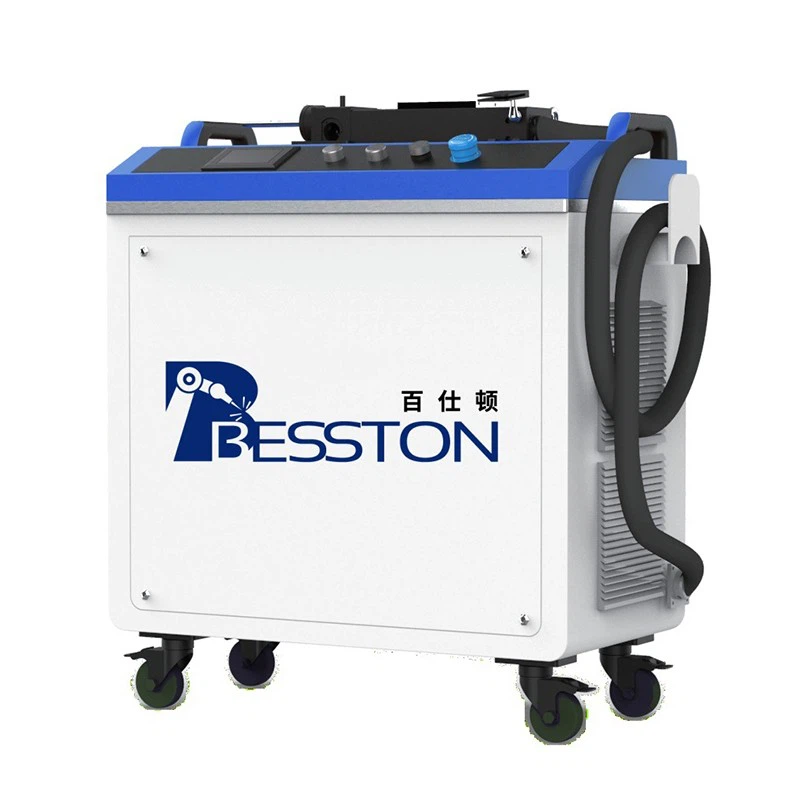
Aerospace Industry
The aerospace industry has even more stringent precision requirements. Components like turbine blades and aircraft frames need to be cleaned to an extremely high standard. Any remaining contaminants can compromise the safety and performance of the aircraft. Our automatic pulse laser cleaning machines are designed to meet these high - precision requirements, ensuring that every part is thoroughly cleaned.
Manufacturing Industry
In the manufacturing industry, laser cleaning is used for preparing surfaces for coating or welding. The cleaning precision is crucial to ensure a good bond between the coating and the substrate or a strong weld. For example, when cleaning metal surfaces before painting, any residual contaminants can cause the paint to peel off.
Our Fiber - Optic Cleaning Machine is perfect for precision cleaning in manufacturing, especially for fiber - optic components.
Pushing the Limits of Cleaning Precision
So, how can we push the limits of cleaning precision?
One way is to continuously improve the laser technology. By developing lasers with better beam quality, shorter pulse durations, and higher pulse frequencies, we can achieve more precise cleaning. Another approach is to use advanced control systems. These systems can adjust the laser parameters in real - time based on the surface characteristics and the type of contaminants.
For example, our Laser Cleaning Workstation for Mold Maintenance uses an advanced control system to optimize the cleaning process for mold surfaces.
Conclusion
In conclusion, the cleaning precision limit of an automatic pulse laser cleaning machine is determined by a combination of factors, including laser parameters, beam quality, and surface characteristics. By understanding these factors and continuously improving the technology, we can achieve higher cleaning precision.
If you're in the market for an automatic pulse laser cleaning machine and want to discuss your specific needs, feel free to reach out. We're here to help you find the perfect solution for your cleaning requirements. Whether it's for automotive, aerospace, or manufacturing, our machines are up to the task.
References
- Laser Cleaning: Principles, Applications, and Technologies. Springer.
- Journal of Laser Applications. Various issues on laser cleaning research.